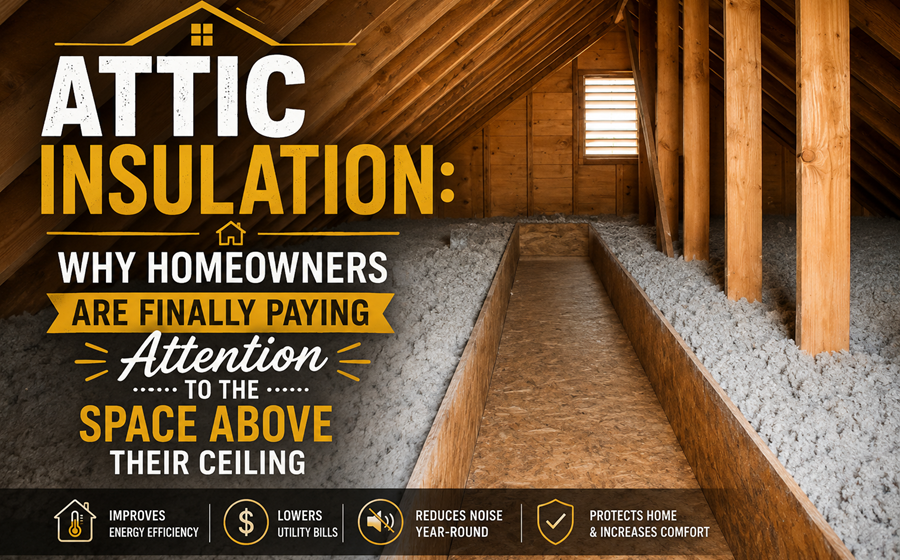

The attic has quietly become one of the most talked-about spaces in home renovation right now — not because of what it looks like, but because of what it’s costing homeowners in wasted energy. Here’s what’s actually changing in the world of attics, from air quality discoveries to a tax credit deadline that just passed.
Old Attic Insulation Might Be Hurting Your Air Quality
This is the finding turning heads right now: attic insulation isn’t just about temperature control anymore. Contractors are increasingly finding that homes with insulation over twenty years old often contain hidden allergens affecting respiratory health, and insulation naturally settles over time, leaving gaps at the top of walls and rafters that let unfiltered air flow in from the attic. Wet, degraded insulation can also become a breeding ground for mold, turning an efficiency problem into a genuine health issue.
A Tax Credit Homeowners Relied On Just Disappeared
Here’s the timely news catching a lot of homeowners off guard: the federal Section 25C tax credit for insulation expired at the end of last year, meaning new installations no longer qualify for that credit. If you’ve been putting off an attic upgrade hoping to catch the incentive, that window has now closed — which is pushing some homeowners to move faster before costs feel even less subsidized.
The Real Money Is in Pairing Air Sealing With Insulation
The single biggest lesson from recent energy data: insulation alone isn’t enough. Homeowners who combine air sealing with upgraded attic insulation save an average of 15% on heating and cooling costs — about 11% off total energy bills. The highest-impact move is bringing an under-insulated attic up to the recommended R-49 or R-60 level using blown-in fiberglass or cellulose, or closed-cell spray foam for irregular spaces and roof decks.
Real Homeowners Are Seeing Dramatic Results
This isn’t just theoretical. One recent case involved a 15-year-old home in the Southeast where original attic insulation had degraded to only R-11 in some spots — far below the R-38 recommended for that climate zone. After a single-day blown-in cellulose upgrade costing around $2,200, the homeowner reported a 35% reduction in cooling costs during peak summer, along with the elimination of hot spots on the second floor.
Radiant Barriers Are Trending in Hot Climates
For homeowners in sunnier regions, radiant barriers are becoming a popular add-on. Pairing a radiant barrier with standard attic insulation can reduce cooling costs by 5–10% in hot, sunny climates, though the Department of Energy notes they aren’t cost-effective in colder regions — a reminder that the “best” attic upgrade really does depend on where you live.
Attics Are Becoming Home Offices, Not Just Storage
The other major shift happening in attics has nothing to do with insulation at all. As remote and hybrid work stick around, more homeowners are converting attic space into quiet, dedicated workspaces — complete with built-in shelving, acoustic soundproofing, and optimal window placement for natural light. It’s turning an overlooked storage zone into one of the most requested renovation projects for anyone needing a door they can actually shut at the end of the workday.
Mineral Wool Is Gaining Ground for Fire Safety
As attic conversions increase, so does interest in safer materials. Mineral wool insulation is gaining traction because it’s fire-resistant and won’t help spread flames, while also resisting moisture and mold — a meaningful upgrade for attics being converted into livable, occupied space rather than just storage.
The Bottom Line
The attic has gone from “the place you forget about” to one of the highest-ROI spaces in the entire house — quietly responsible for major energy loss, indoor air quality issues, and now, thanks to remote work, genuine livable square footage. Whether you’re chasing lower utility bills, cleaner indoor air, or a quiet place to work, the case for paying attention to what’s happening above your ceiling has never been stronger.